
UX STRATEGY • UX RESEARCH • PRODUCT DESIGN
Startpage
Closing the feedback loop
Project Scope
• UX Strategy
• UX Research
• UX/UI Design (Desktop/ Mobile)
• Stakeholder Alignment
• Data-informed Design
Tools
Figma • Claude • ChatGPT • Gemini • Google Sheets • Slack • Tableau • Sigma
Deliverables
Team Interviews • Competitive Analysis • Redesigned Feedback Flow • Sentiment Tracking System • AI-assisted Synthesis • Weekly Stakeholder Summaries • Quarterly Research Insights Deck
Overview
Startpage serves over 1 million users with private search, delivering quality results without storing personal data, IP addresses or search history. As Senior UX Product Designer at System1, I work across the full product experience from core search to mobile apps.
Startpage has a feedback button. What it didn’t have was anyone looking at what came through it. Feedback initially collected in Tableau and now Sigma sat largely unreviewed. The support team handled what came reactively, triaging bugs and high impact issues, routing most of it to Jira tickets that rarely moved. There were no regular check-ins on user sentiment, no quantitative view of what users were experiencing over time and no clear sustainable path from feedback to roadmap.
Solution
The work had two tracks: redesigning the feedback flow itself to reduce friction and capture richer data and building a system around that feedback so that the team could access, synthesize, and act on it regularly. The result was a simplified one-step submission experience, a cross-functional stakeholder cadence, and an AI-assisted pipeline that reduced feedback processing time from 2.5 days to 2-3 hours, and fed directly into sprint planning.
Audit
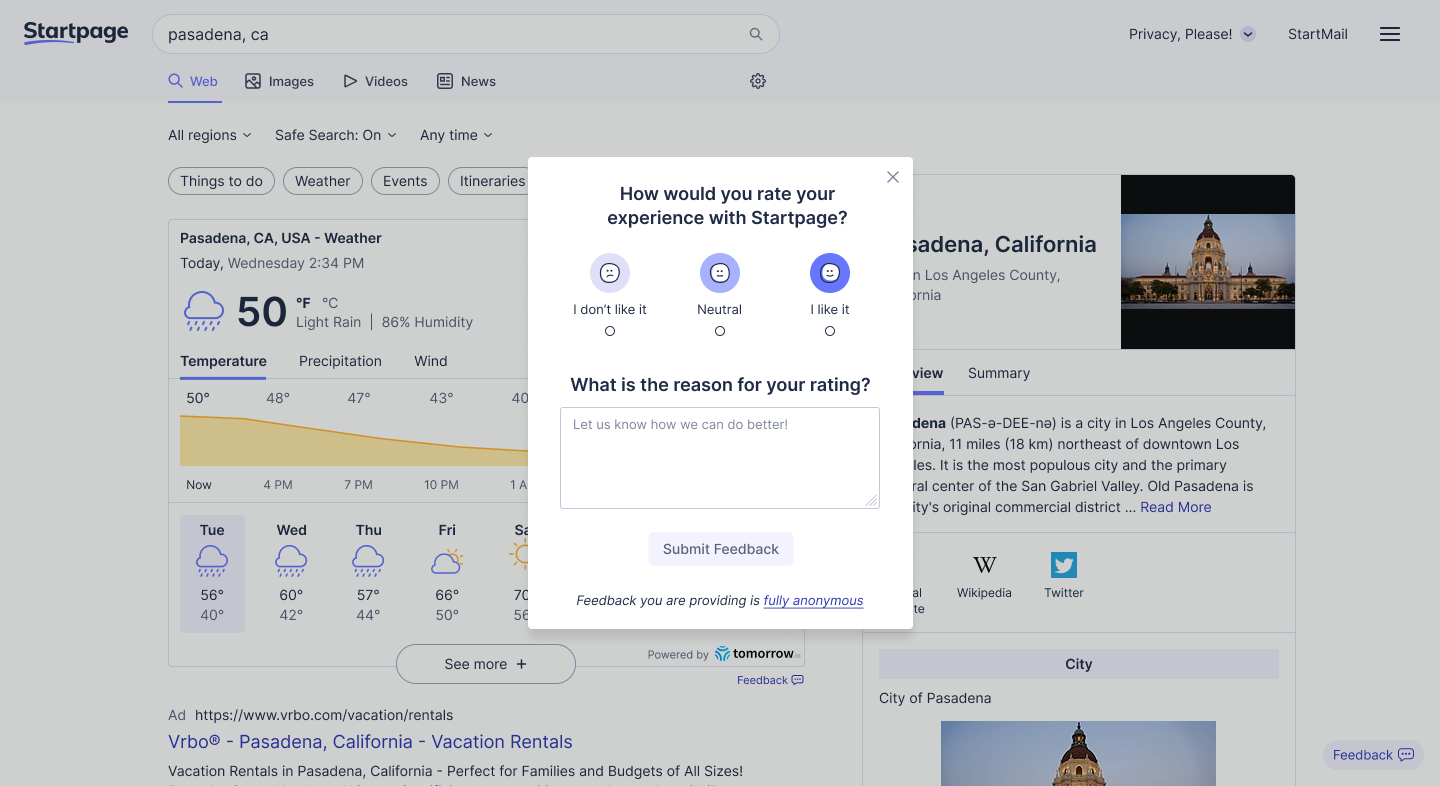
The existing feedback flow asked users to self-categorize their submission using dropdown menus across multiple steps, onerous enough that it likely suppressed response volume and skewed results toward users with high frustration. Qualitative text input was only available for certain feedback types, not all, meaning we were losing signal on a large portion of what users wanted to say.
I conducted interviews with the support team to understand how they were currently using feedback data and where the gaps were. I also ran a competitive analysis of feedback flows across comparable products to identify patterns in discoverability, submission simplicity, and data capture.
The current tiered flow pairs one-click sentiment with category dropdowns for users who want to go deeper. But Support notes the categories are rigid — users often default-pick, and the selection frequently doesn't match their written feedback.
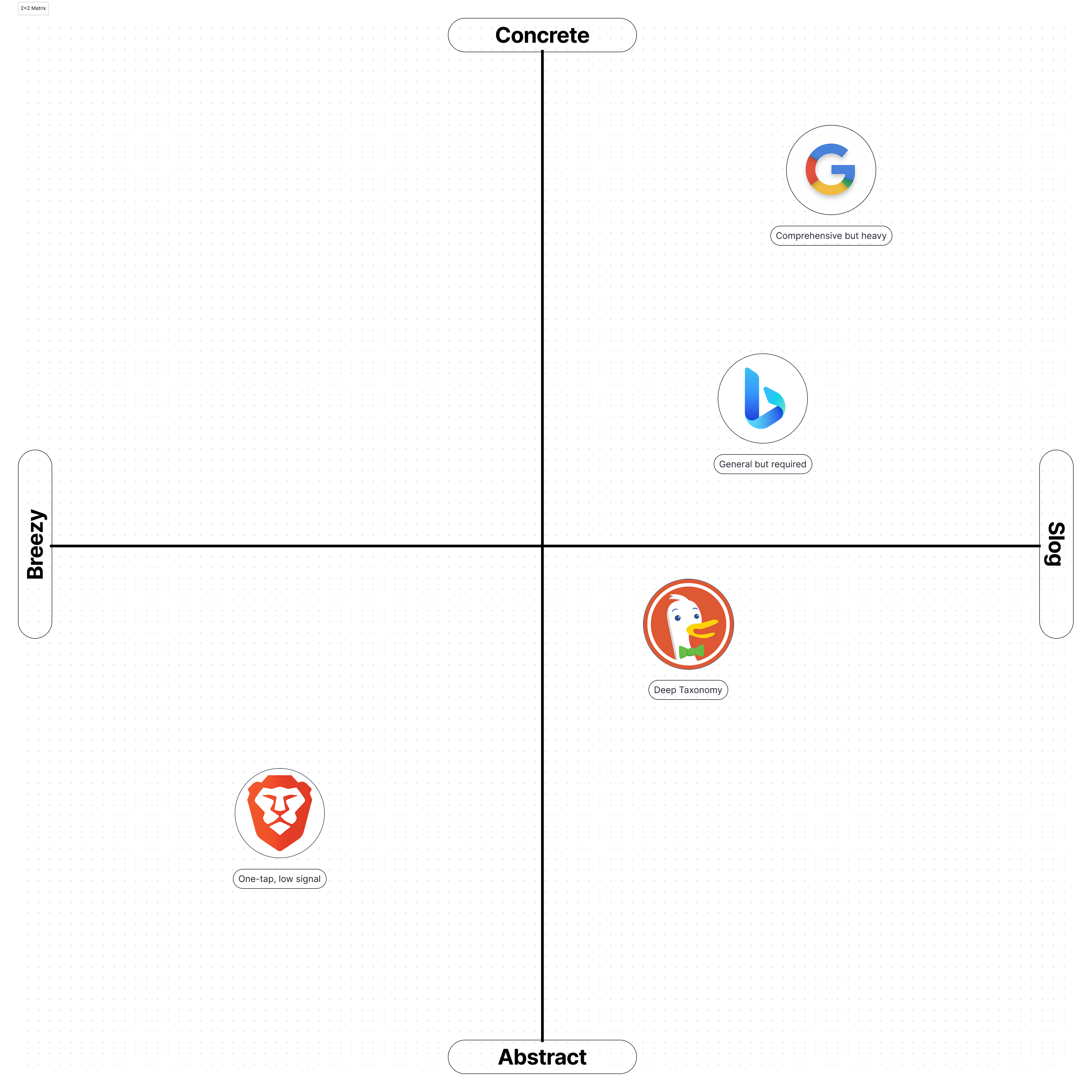
A 2×2 of where each competitor lands on actionable signal vs. user effort.
Core problems
-
No one owned the feedback.
Without a designated stakeholder, data collected in Tableau was deprioritized and rarely surfaced.
-
The feedback user flow created friction.
Multi-step, self-categorized submissions reduced completion rates and limited the qualitative signal we could collect.
-

There was no closed loop.
Feedback came in but had no structured path to the team, to analysis, or to the product roadmap.
The Redesign
The redesigned flow addressed each of these problems directly.
Touchpoints were increased and made persistent. Users can now submit feedback from more places without having to find it. The submission was simplified to a single step, removing the dropdown categorization from the user. The existing sentiment score was retained but added a text field for qualitative input across all feedback types.
Before
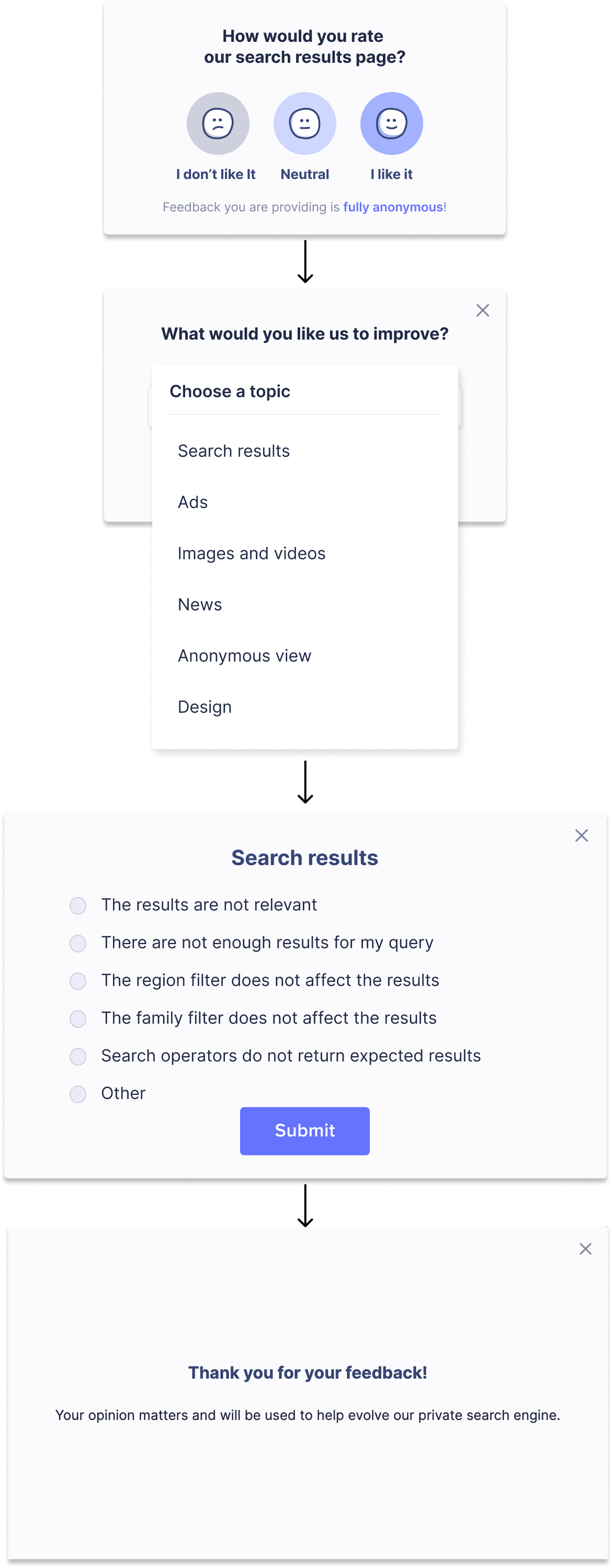
Tiered design
After
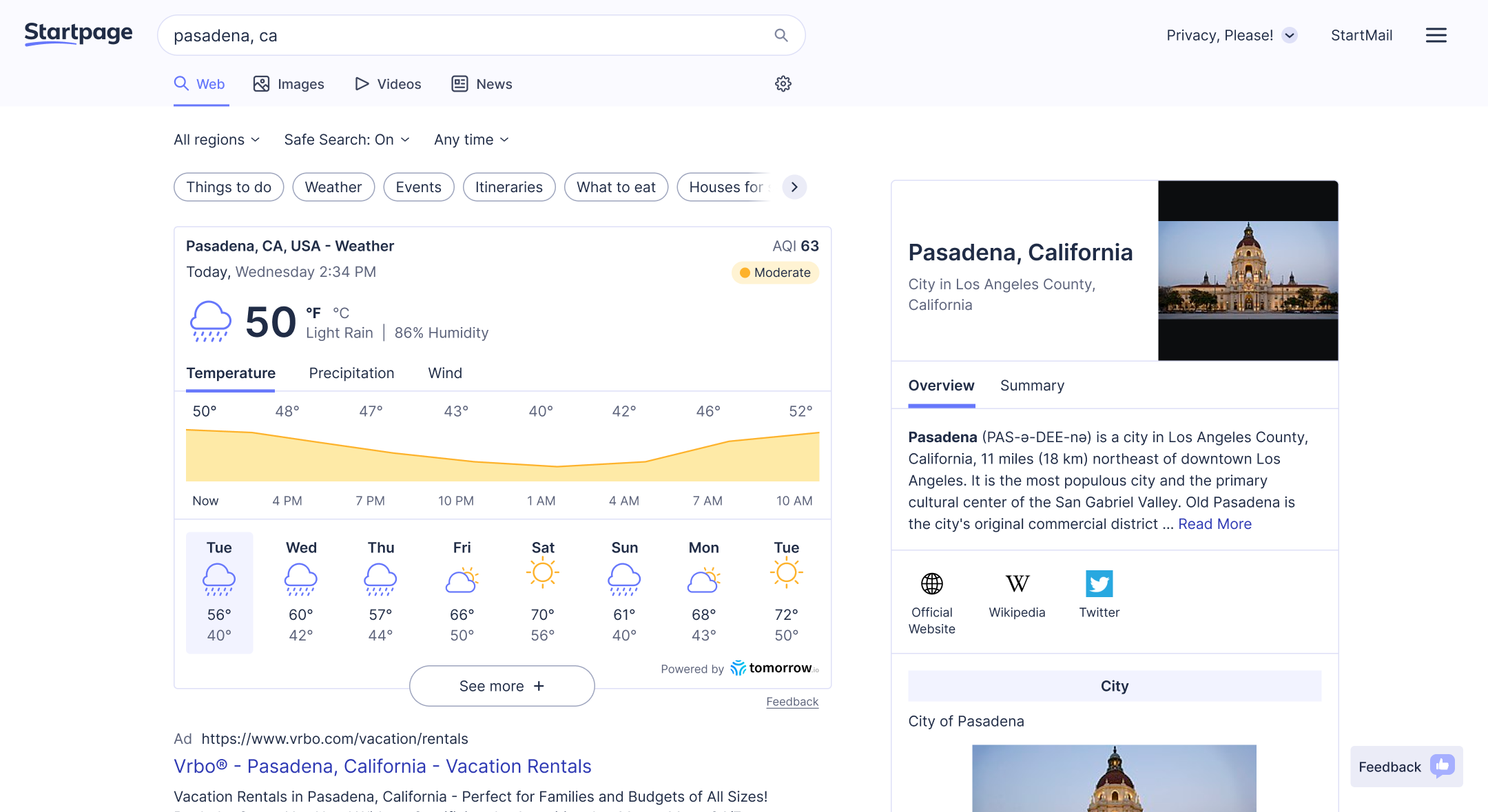
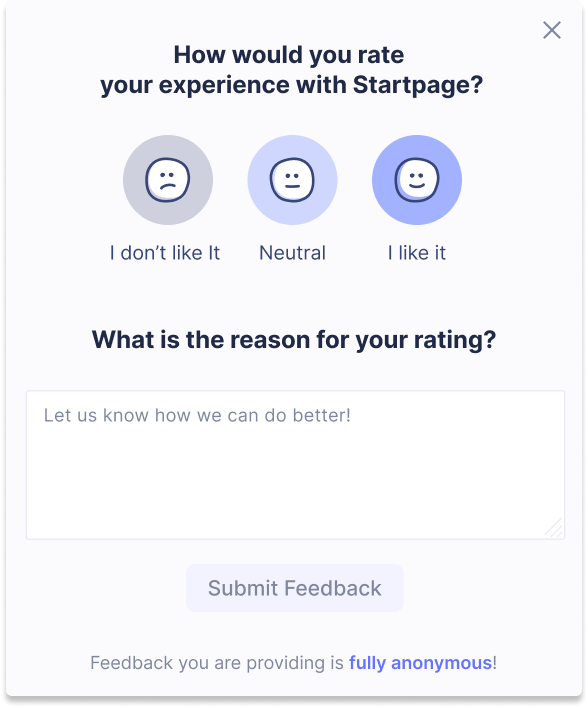
Single tap & added feedback touchpoints to info panels
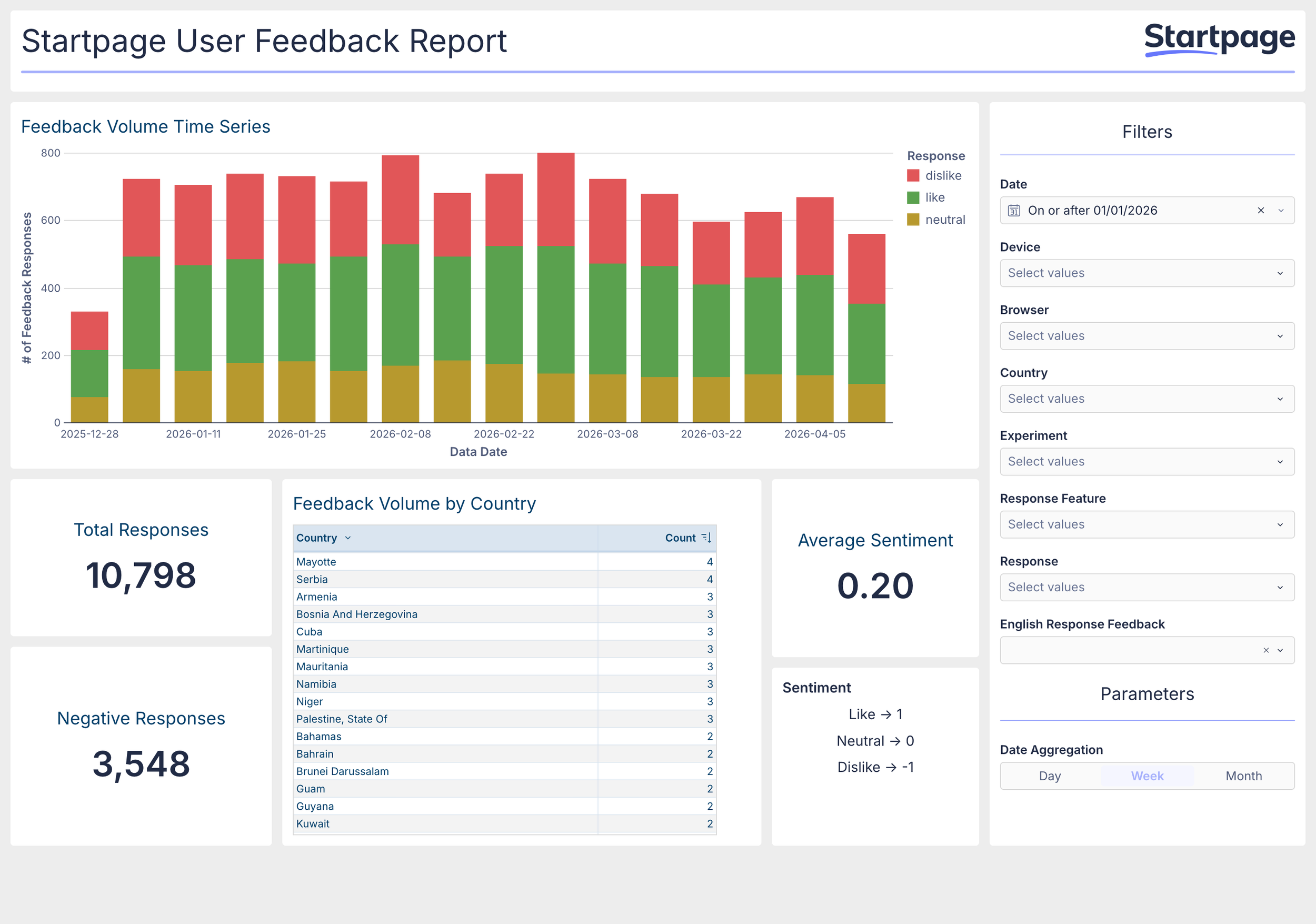
Not only was the feedback widget redesigned but also the data backend and visualization. Before it was just charts that mapped to feedback levels that no one could keep track of and too much mental math. With improved visualization, we can health check our user base quickly.
Stakeholder ownership was formalized. Meetings were established across the support, UX, data and product management to review top trends and surface issues for sprint prioritization.
Feedback Output
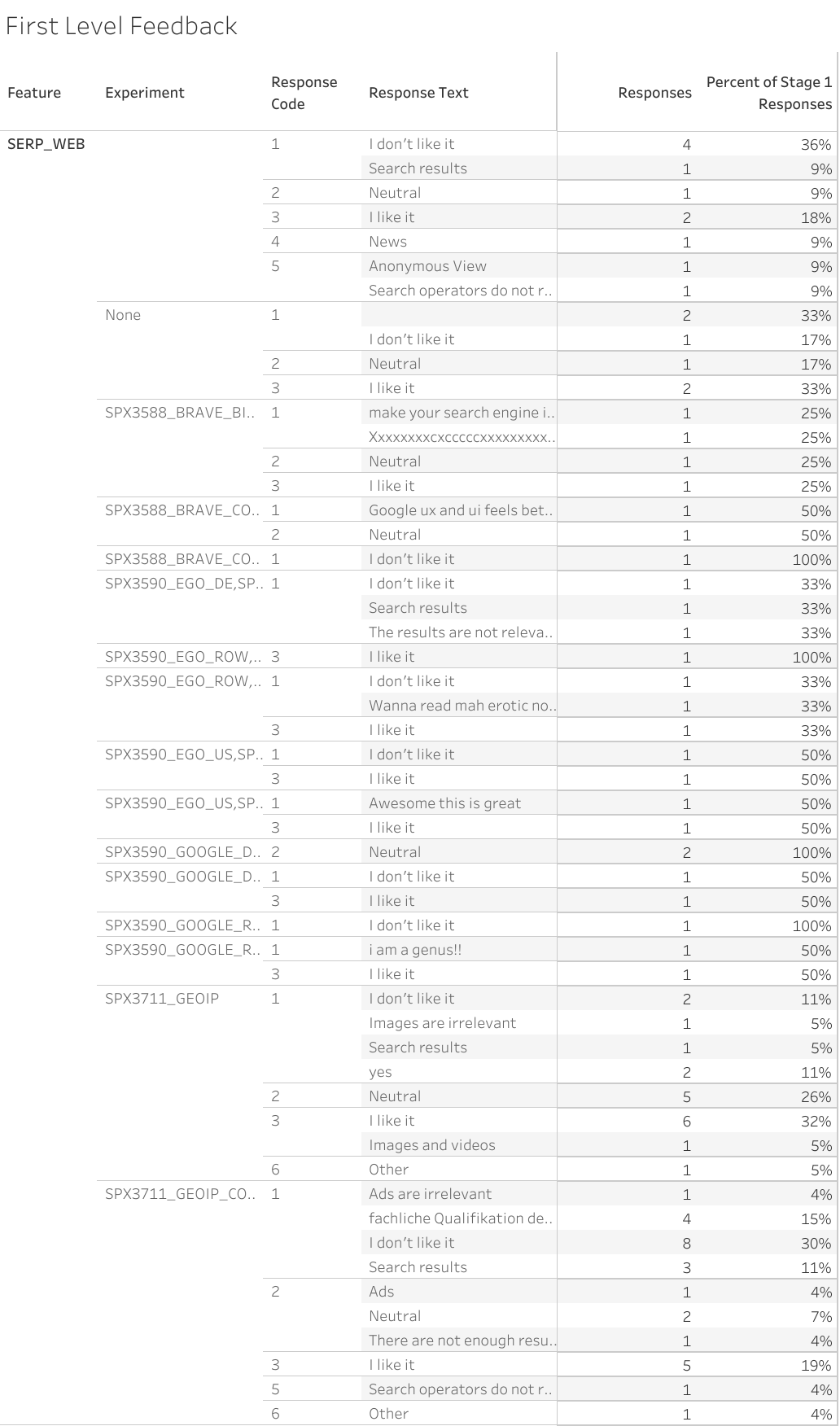
Before
After
Closing the loop
Redesigning was only half the problem. With more feedback coming in, the team needed a way to synthesize it quickly and consistently.
We were limited to the tools in our current stack. So we started off manually classifying feedback in a shared spreadsheet, identifying trends, and generating pivot tables to answer questions such as “What are the top 5 issues that users are leaving feedback?”. This was a tedious process. As AI tooling evolved, I was able to develop a script to automate classification through an AI agent.
Further, our engineers created an internal AI tool to deliver automated weekly summaries of top user issues into a dedicated Slack channel. What previously required days of manual work and produced reports few people read now surfaces as a brief, accessible weekly digest the whole team can act on.
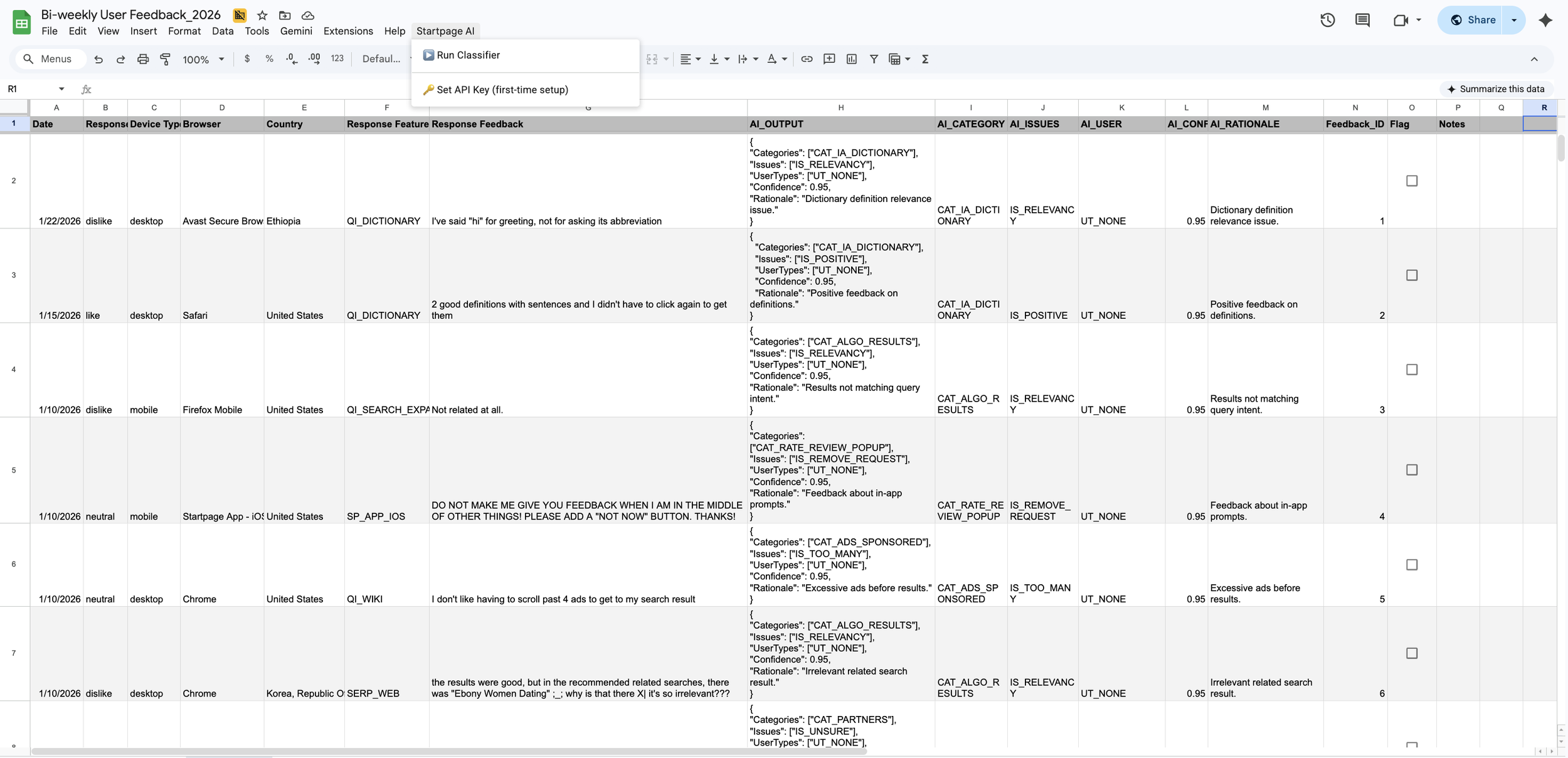
AI classifier
Calculon: our AI Automated Slack output
Constraints
Getting engineering help to fully integrate all feedback channels into one single touchpoint was not approved at the time, which added manual overhead to the classification process. Further, we were limited on what feedback we could actually action on and change to core search due to third party search API restrictions and ad-revenue dependencies. These constraints shaped what was actionable in the short term and what required longer term investment.
Design Solution
Startpage's new feedback flow pairs a single sentiment tap with optional free text. Categorization moves from user to the back end, removing the the category mismatch that was muddying data.
Outcomes
The redesigned flow was only half the story. The bigger shift came downstream, in how feedback moved through the team and into the product itself.
Feedback processing time reduced from 2.5 days to 2-3 hours through AI assisted synthesis.
Cross functional stakeholder visibility established through bi-weekly among the Support team and monthly PM review cadences. Feedback now feeds directly into sprint planning.
This work shipped two product improvements.
Privacy messaging added to core search, addressing a consistent theme in qualitative data.
Mobile feature requests drove DAU to 55K and lifted the App store rating from 4.1 to 4.5 stars.
Reflection
The most important shift this project produced wasn’t a design deliverable but an organizational shift. Getting user feedback to an untouched dashboard no one owned to a shared weekly rhythm that informs the roadmap required as much stakeholder work as design work. The AI automations made the process sustainable but the gaps in historical data trend and incomplete integration of multiple feedback channels into one are real limitations. The next version of this require unification of data across all channels to get a clearer picture of what users want.
We don’t need to guess what users want. They are telling us and now we have the infrastructure to keep listening and take action.